Day 11: Wheel size and tire width — what those two numbers actually mean

Day 11: Wheel size and tire width — what those two numbers actually mean

Every eBike listing shows two tire numbers — wheel diameter and tire width — but most beginners skip right past them. This lesson decodes the common sizes (700c, 26", 27.5", fat 4"), explains the four ride qualities they directly control (comfort, grip, rolling resistance, weight), and uses the Aventon Aventure.2 to show exactly what a deliberate fat-tire choice looks and feels like. Includes a 5-row comparison table and a one-question exercise to match any bike you're considering to your actual route.

eBike School: 30-Day Daily Micro-Lessons
16/6/2026 · 0:20
1 suscripciones · 14 contenidos
The spec sheet says "26 × 4.0" on one bike and "700c × 38mm" on another. Most beginners stare at those numbers for a second and move on — but they're one of the clearest signals on the entire listing about what riding that bike will actually feel like.

Today's concept: wheel diameter and tire width

Every eBike tire is described by two measurements: wheel diameter (how tall the wheel is) and tire width (how wide the rubber is). They're almost always printed together on the tire sidewall — for example, 26 × 4.0 or 700c × 38mm.
Wheel diameter sets the overall height of the wheel. Tire width determines the contact patch — the strip of rubber actually touching the ground at any given moment. They interact constantly: a wider tire on a smaller wheel rides very differently from a narrow tire on a tall wheel, even at similar overall heights.

Why it matters when you're buying

These two numbers shape four things you'll feel every ride.
Cargando tarjeta de estadísticas…
Comfort. A wider tire holds more air volume, so it acts like a soft cushion under you, absorbing road buzz, cracks, and rough pavement without a suspension fork. On a heavy eBike, this matters more than on a regular bike because the extra weight amplifies every bump you don't absorb.
Grip and terrain. A wider contact patch sticks to loose surfaces — gravel, dirt, wet pavement — better than a thin strip of rubber. Fat tires (3" wide and up) can handle sand or snow that would stop a narrow tire completely.
Rolling resistance. Here's the trade-off: a wider tire has more rubber dragging against the road surface. On smooth pavement at 15+ mph, a narrow tire rolls noticeably faster with the same motor output. For dedicated commuters who ride dry, flat roads every day, that efficiency gap is real.
Weight. Wider tires and their rims are heavier. A fat-tire eBike can weigh 10–15 lbs more than a comparable commuter, partly from bigger rubber.

The common sizes, decoded

SizeWidthWhere you'll see itBest for
700c × 32–40mm~1.25–1.6"City and commuter eBikesPaved roads, bike lanes, efficient commuting
27.5" × 2.0–2.4"~2.0–2.4"Hybrid and trekking eBikesMixed terrain, light trail, gravel paths
26" × 2.0–2.4"~2.0–2.4"Some commuters, older MTB-style eBikesVersatile; handles light dirt and pavement
27.5" × 3.0–3.5"~3.0–3.5"Plus-size and adventure eBikesTrail riding, bumpy roads, some gravel
26" × 4.0–4.8"~4.0–4.8"Fat-tire eBikesAll-terrain: sand, snow, gravel, loose dirt
The 700c label means the outer diameter is about 700mm — this is the size on road bikes and most city eBikes. It's not a typo or metric confusion; it's simply a different sizing convention than the inch-based measurements on mountain and fat-tire bikes. 1
City eBike with narrow 700c tires rolling on smooth park pavement
Narrow tires on a city eBike roll efficiently on smooth pavement — the opposite end of the spectrum from fat tires. 1

One real example: the Aventon Aventure.2

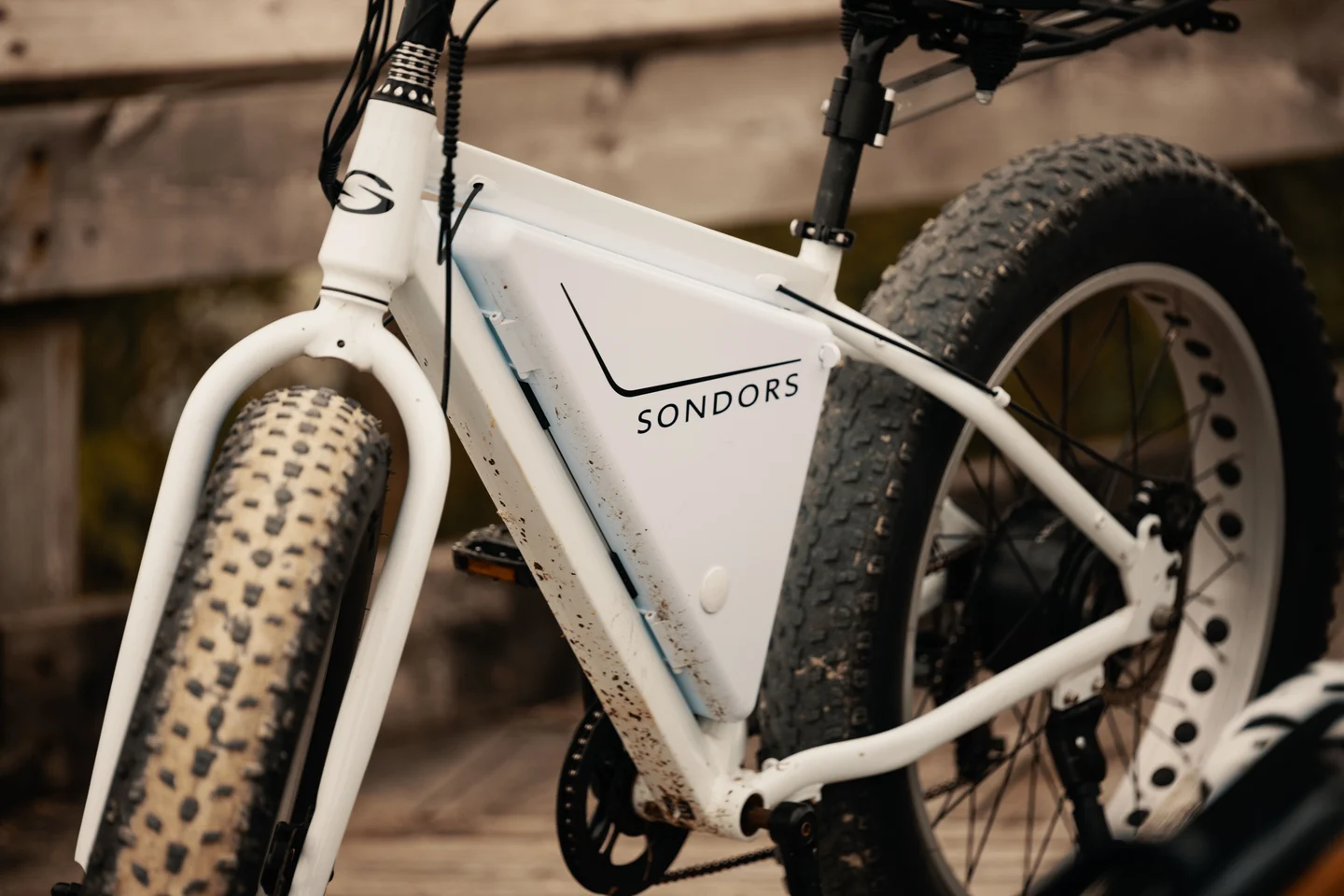
The Aventon Aventure.2 is built around 26" × 4.0" fat tires — the widest common width for production eBikes. At that width, the contact patch is roughly the size of your fist rather than your finger. 2
What does that mean in practice? The Aventure.2 rolls over potholed streets, packed gravel, and even sand without you needing to slow down and pick your line. The extra air volume cushions the ride so effectively that the bike has only a front suspension fork — no rear shock — and most riders don't miss it. You feel road texture but not pain. 3
The trade-off is real, though: the Aventure.2 weighs about 73 lbs and rolls slower on smooth pavement than a commuter eBike with 700c × 38mm tires. If your entire route is flat bike lanes and you care about range per charge, a fat-tire bike is working harder than it needs to.
The Aventure.2 (MSRP ~$1,799 at launch; the current Aventure.3 is ~$2,099) is a strong example of a bike that leans deliberately into fat-tire capability — it's an intentional design choice, not a budget compromise. 4
Fat-tire eBike with 26 × 4.0 inch tires showing chunky wide rubber
Fat tires (4" wide) create a wide, cushioned contact patch — the same 26" × 4.0" format used on the Aventon Aventure.2 and similar all-terrain eBikes. 2

The one question that narrows your choice

Ask yourself: where will you actually ride 80% of the time?
  • Mostly paved roads and bike paths → 700c × 32–40mm. You want rolling efficiency and lighter weight.
  • A mix of pavement and light gravel or bumpy streets → 27.5" or 26" × 2.0–2.4". Comfortable on both without the weight penalty of fat tires.
  • Regular gravel, dirt trails, or rough terrain → 26" or 27.5" × 3.0–4.0". The extra width earns its keep.
Resist the temptation to buy the fattest tire "just in case." If 90% of your rides are smooth tarmac, fat tires add weight and rolling resistance you'll feel every day but never need.

Today's exercise

Find a bike you're currently considering — one you've looked at online or seen in a shop. Write down its tire size (usually listed under "specs" or "components" on the product page). Then compare it against the table above. Does the size match how you actually described your typical route to yourself?
If the tire is wider than you'd need for your usual route, note that before your test ride — you'll feel the difference in weight and rolling feel. If it's narrower than you'd prefer for your terrain, that's equally useful to know before you commit.
Tomorrow we'll look at how different eBike categories — commuter, cargo, mountain — use these specs as part of a whole package. You'll start recognizing bikes' intended purpose from a hundred yards away.

Añade más opiniones o contexto en torno a este contenido.

  • Inicia sesión para comentar.