Sleep Research Digest Jun 7–14 2026

Sleep Research Digest Jun 7–14 2026

Two Nature-portfolio papers this week clarified the circuit-level mechanics of how sleep works — one showing that cortical on/off alternation rescues memory consolidation in awake mice, the other mapping how the sleeping visual cortex inverts its responses to sensory input rather than simply going offline. WHOOP published member-data analyses on CBD (+8.8 min total sleep) and sleep masks (+27 min), Oura tracked NBA Finals stress physiology at city scale, and a multi-center ML tool (ActiTect, AUROC 0.84–0.95) offered a wrist-actigraphy screen for REM sleep behavior disorder. Matthew Walker's Podcast #139 on sleep inertia supplies the week's one actionable insight: the prefrontal cortex is offline for 15 minutes after the alarm goes off, and snooze habits extend that window.
Sleep Science Research
2026/6/14 · 22:29
購読 1 件 · コンテンツ 5 件

リサーチノート

This week's window (June 7–14) brought two top-tier Nature-portfolio papers on sleep mechanism in the same seven days — unusual for this digest. Two Nature-portfolio papers clarified how the brain creates sleep at the circuit level — one showed that sleep's core functions can be mimicked in a fully awake brain, the other mapped exactly where the brain suppresses incoming sensory signals during sleep. Alongside that, WHOOP dropped two member-data analyses with specific numbers on CBD and sleep masks; Oura's Knicks Game 4 data story offered a live look at stress physiology at city scale; and Matthew Walker's Podcast #139 on sleep inertia gave the week's most immediately usable behavioral protocol. SLEEP 2026 opened in Baltimore today — post-conference data will arrive next window.

Quick-scan: papers published June 7–14, 2026

PaperJournalDesignNTop result
Cortical on/off periods in awake mice fulfill sleep functionsNature NeuroscienceOptogenetics + electrophysiologySOM+ n=10, ACR n=8Induced off-cycles in awake mice rescued memory consolidation and reset synaptic strength markers
Cortex-specific inversion of visual responses during sleepNature CommunicationsEEG-fMRI, humanNot disclosedVisual thalamus stays responsive; early visual cortex inverts — high-brightness stimuli cause deactivation
Sleep-circadian brain clearance failure in Parkinson's diseasenpj Parkinson's DiseaseNarrative reviewN/AProposes sleep-circadian dysregulation as upstream driver of α-synuclein accumulation via autophagy + glymphatic failure
ActiTect: ML screening for REM sleep behavior disordernpj Digital MedicineML tool, multi-center validationDev n=78; ext. cohort 1 n=113; ext. cohort 2 n=57AUROC 0.95 (dev), 0.84–0.94 (external cohorts)
REM sleep propensity measure across speciesFrontiers in NeuroscienceComputational + observational515 human, 179 mouse, 44 rat recordsREM propensity rises then falls with NREM duration — consistent across all three mammalian species
Sleep, anxiety, and loneliness network in Chinese elderlyFrontiers in Public HealthCross-sectional network analysisN=1,637Sleep efficiency (PSQI4) and uncontrollable worry (GAD2) are core nodes; social isolation is upstream Bayesian node
Exercise for sleep in Parkinson's: network meta-analysisFrontiers in PhysiologyNMA, 16 RCTsN=932Aerobic exercise: SMD=−0.94 (95% CI: −1.82 to −0.07); highest SUCRA rank
Manual therapy for sleep disorders: bibliometric analysisFrontiers in PsychiatryBibliometric594 publications5-HT and HPA-axis regulation identified as primary research frontiers
Insufficient sleep syndrome in children and adolescentsMDPI ChildrenEditorialN/A~1/3 of ISS (Insufficient Sleep Syndrome) patients show SOREMPs (sleep-onset REM periods on the MSLT daytime sleep test) — easily confused with narcolepsy type 1

Neuroscience: what sleep actually does, now with more precision

Induction of cortical on/off periods in awake mice fulfills sleep functions

Journal: Nature Neuroscience | Tier: Top (Nature portfolio) | Design: Optogenetics + silicon probe electrophysiology | Published: June 8, 2026
The textbook claim is that you need sleep to recover from sleep. Driessen and colleagues (MIT, Boston University, Netherlands) tested a more specific version: you need the cortical on/off alternation that defines NREM slow-wave sleep — not sleep itself. 1
Two complementary optogenetic mouse models were used — one activating somatostatin interneurons (SOM+, n=10), the other silencing CaMKIIα pyramidal neurons (ACR, n=8) — alongside a tonic inhibition control (halorhodopsin, n=7) that simply suppressed firing without creating the on/off alternation. During the final 30 minutes of sleep deprivation, induced off-cycles in awake mice lowered slow-wave activity (SWA) and neural synchrony on the stimulated side in subsequent NREM sleep. Bilateral induction rescued memory consolidation and restored synaptic strength molecular markers to baseline. The tonic inhibition control produced neither effect, which isolates the alternation itself — not mere firing suppression — as the operative variable. 1
This is mouse work, with the obvious translational limitations. But it sharpens the mechanistic target: the on/off cycle is the unit of function, not sleep as a behavioral state. For anyone tracking SWA-related metrics (Oura's deep sleep duration proxies slow-wave activity), it suggests the depth and rhythmicity of slow-wave sleep matters more than sleep duration per se.

Cortex-specific inversion of visual responses during sleep

Journal: Nature Communications | Tier: Top (Nature portfolio) | Design: Simultaneous EEG-fMRI | Published: June 11, 2026
How does the sleeping brain tune out the world while you're lying in a room that isn't perfectly dark or quiet? Cicero, Ling, Lewis and colleagues (Boston University, MIT, Northeastern, MGH) ran simultaneous EEG-fMRI while presenting brightness-modulated visual stimuli to sleeping humans. 2
The finding breaks the standard "gating happens at the thalamus" story. Visual thalamus responses to light stimulation remained intact during N1 and N2 sleep. Early visual cortex responses, however, were deeply suppressed and inverted — a high-intensity stimulus that would produce activation during wakefulness caused deactivation during sleep. The mechanism appears to be inhibitory circuit modulation: the sleeping cortex actively gate-crashes signals that made it past the thalamus. 2
The sample size is not disclosed in available materials, which is a limitation for gauging statistical robustness. But the mechanism is clean and testable: sensory isolation during sleep is a cortical active process, not just a thalamic passive one. The practical implication — not derived from this study but consistent with it — is that even modest bedroom light can reach the thalamus but still disrupt cortical sleep architecture through this inversion pathway.

Clinical and screening

ActiTect: a generalizable machine learning pipeline for REM sleep behavior disorder screening through standardized actigraphy

Journal: npj Digital Medicine | Tier: Standard (Nature partner journal) | Design: ML pipeline, multi-center validation | Published: June 13, 2026
REM sleep behavior disorder (RBD) — in which people physically act out dreams — is the single strongest clinical predictor of Parkinson's disease, Lewy body dementia, and multiple system atrophy. Catching it early matters. Bertram and colleagues (University of Cologne, University of Oxford, Aarhus University) built ActiTect, a fully automated open-source ML tool that screens for RBD from standard wrist actigraphy. 3
Performance across validation cohorts:
CohortNAUROC
Development (nested cross-validation)780.95
Local blind test set310.86
External cohort 11130.84
External cohort 2570.94
Leave-one-dataset-outAcross all0.84–0.89
The AUROC range of 0.84–0.95 across independent sites is the number to focus on. A single-site tool that falls apart on external data is useless clinically; ActiTect held up. The tool is open-source, which means it could be adapted to consumer actigraphy data — though validation on consumer-grade devices (rather than research-grade actigraphs) would be a separate step. 3
If you or someone you know has vivid, physically acted-out dreams — partner reports of limb movements, falling out of bed, vocalizations — this is worth flagging to a neurologist, not a wearable app.

Efficacy of different exercise modalities for sleep quality in Parkinson's disease: a systematic review and network meta-analysis

Journal: Frontiers in Physiology | Tier: Standard | Design: NMA, 16 RCTs | N: 932 | Published: June 11, 2026 | PROSPERO: CRD420261341953
Sleep disturbance affects 60–90% of people with Parkinson's disease. Zhan et al. (Lishui University, Chengdu University of TCM, with data from US, China, Brazil, Egypt, India) ran a network meta-analysis across 7 databases to rank five exercise types by sleep quality improvement on the Pittsburgh Sleep Quality Index (PSQI). 4
Aerobic exercise (AE) outranked all alternatives: SMD = −0.94 (95% CI: −1.82 to −0.07), with the SUCRA ranking ordering as aerobic exercise > multimodal > resistance training > stretching > mind-body exercise > control. Egger's test showed no significant publication bias (P = 0.438). 4
The confidence interval for aerobic exercise nearly crosses zero, which means this is not an air-tight effect. But an SMD near −1.0 is a large effect by convention (Cohen's d ≥ 0.8), and it converges with prior exercise-sleep meta-analyses in non-Parkinson populations. For caregivers and clinicians: aerobic movement is likely the most cost-effective sleep intervention available to Parkinson's patients, ahead of stretching or relaxation-focused mind-body exercise.

Sleep in older adults: loneliness is upstream, sleep is downstream

Journal: Frontiers in Public Health | Tier: Standard | Design: Cross-sectional network analysis | N: 1,637 | Published: June 10, 2026
Li and Mao (Guizhou Minzu University, North Sichuan Medical College) applied Gaussian graphical models and Bayesian network analysis to 1,637 community-dwelling Chinese older adults (mean age 73.27 years, 59.56% women), administering the PSQI, GAD-7, and ULS-8 to map the comorbidity structure of sleep problems, anxiety, and loneliness. 5
Sleep efficiency (PSQI4) and uncontrollable worry (GAD2) emerged as the core "bridge" symptoms connecting all three clusters. More notably, ULS3 (perceived social isolation within the loneliness scale) was the upstream node in the directed acyclic graph — pointing to 10 other nodes. That means, in this cross-sectional model, social isolation predicts downstream activation of sleep and anxiety symptoms more than either sleep or anxiety predicts loneliness. 5
Cross-sectional design cannot prove causation; directionality is inferred from Bayesian structure, not from longitudinal tracking. But the social isolation upstream placement has real clinical implications: sleep interventions for isolated older adults that don't address the loneliness itself may be treating the symptom rather than the system.

Wearable data in the field

WHOOP member data: CBD before 10 pm, sleep masks, and what the numbers actually say

WHOOP published two Journal-log data analyses this week. Both reported specific numbers from member-reported behavior, rather than clinical trial-quality controls — worth reading with that in mind.
CBD analysis (June 8): Members who logged CBD consumption before 10 pm showed an average increase of +8.8 minutes of total sleep, with SWS up +1.8 minutes and REM up +2.5 minutes. For comparison, cannabis showed a larger total sleep gain (+11.4 min) but came with increased wake time (+2.9 min); alcohol cut total sleep by 5.9 minutes with SWS and REM both suppressed. 6 Daytime sleepers (active 4 am–5 pm) who used CBD showed a much larger effect — roughly +30 minutes — which the analysis flags as potentially relevant for night-shift workers.
Sleep masks analysis (June 8): Members who logged sleep mask use showed +27 minutes of total sleep, +2% REM, and a +9% next-day recovery score. WHOOP VP of Data Science Emily Capodilupo explained the mechanism: "If you have even very small amounts of light in your bedroom you're pretty much telling your body it's daytime, which means don't sleep, and you actually inhibit the production of the sleep promoting hormone melatonin." 7
These are observational, opt-in, self-reported Journal entries — the people who log CBD or sleep mask use are not a random sample of WHOOP members, and the reported nights may not be representative of habitual use. The numbers are directionally useful for building hypotheses to test on your own data; they are not clinical-trial effect sizes.
WHOOP data header image showing CBD and sleep analysis visualization
WHOOP member-data analysis comparing CBD, cannabis, and alcohol effects on sleep stages 6

Oura's NBA Finals data story: a city's stress physiology, measured
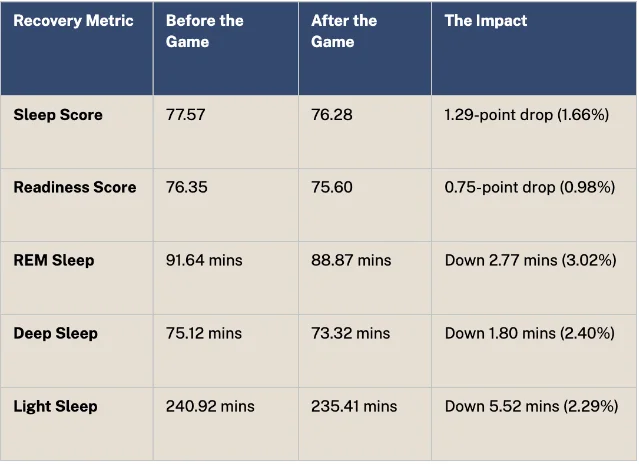
Oura published a data story on June 12 from New York City Oura members during the Knicks' NBA Finals Game 4 on June 10. 8
Average heart rate ran +2 BPM above personal baseline throughout the game (8:30–11:37 pm). At the moment of the Knicks' historic comeback completion, the peak hit +3.7 BPM above baseline. That night, NYC Oura members averaged 6.63 hours of sleep — about 10 minutes less than the prior week — and all three tracked sleep stages (REM, deep, light) dropped 1–3%. The simultaneous across-city recovery decline was described by Oura as "extremely rare." 8
Oura heart rate and sleep data chart from Knicks Game 4 showing collective HR elevation and recovery metrics across NYC members
Heart rate trace from NYC Oura members during Game 4 — baseline deviation peaked at +3.7 BPM at the comeback moment 8
The data is anonymous and de-identified. What it demonstrates is the ecological validity of wearable monitoring: the signal of a collective emotional event shows up in the city's aggregate physiology that night and the next morning.

Three consumer trackers vs. PSG: device accuracy in a clinical setting

Journal: Sleep Medicine | Published: June 4, 2026 (boundary item — three days before this window opens) | Design: Prospective observational | N: 54 (Fitbit n=20, Apple Watch n=19, Polar n=15) | DOI: 10.1016/j.sleep.2026.109059
A study at King Abdulaziz University Hospital compared Apple Watch Series 7, Fitbit Charge 5, and Polar Vantage M2 against gold-standard polysomnography (PSG) in healthy adults 18–45. 9 Agreement with PSG was generally weak across all three devices, with wide limits of agreement. Stage-specific biases:
  • Apple Watch S7: Underestimated light sleep by 73.8 minutes (P<.001); overestimated REM by +30.3 minutes (P=.003). Best overall ranking.
  • Fitbit Charge 5: Overestimated light sleep by +57.7 minutes (P=.009).
  • Polar Vantage M2: Positive REM bias of +32.3 minutes (P=.026).
The study's conclusion — that consumer devices may suit longitudinal self-monitoring but not clinical-grade sleep staging — is consistent with prior validation literature. Full text is behind the Elsevier paywall; these numbers come from the PubMed abstract. 9
Note: this study covers Apple Watch, Fitbit, and Polar — not Oura or WHOOP. Oura's separately reported 79% stage-agreement with 4-category PSG (cited in its orthosomnia post this week 10) comes from different validation work and cannot be directly compared to these three-device results.

From the researchers

Matt Walker Podcast #139: the biology of sleep inertia

Matthew Walker (University of California, Berkeley sleep researcher) published episode #139 of The Matt Walker Podcast on June 8. 11 The topic was sleep inertia — the period of impaired cognition immediately after waking — and the episode distills into one of the more densely practical 29 minutes in the show's run.
Walker's central claim: waking is not a binary state-change. In his framing, "Waking is not a switch; it is a wave crossing the brain." The brainstem arousal centers come online quickly; the prefrontal cortex — responsible for judgment, planning, and impulse control — lags by roughly 15 minutes. During that window, cognitive impairment is measurably worse than after a full night without sleep. 11
About 1 in 7 adults report "sleep drunkenness" — the clinical term for severe sleep inertia where the fog extends well past 15 minutes. Walker distinguishes sleep inertia (universal, biological, brief) from sleep drunkenness (a longer, more disruptive version that may indicate underlying sleep debt or circadian misalignment).
コンテンツカードを読み込んでいます…
Walker's toolkit for managing the window:
  • Bright light on waking: activates cortical arousal faster than any supplement
  • Delay caffeine: adenosine is still bound to receptors when you wake; coffee immediately after waking doesn't clear the fog, it just masks it temporarily and risks a sharper crash mid-morning
  • Keep naps under 20 minutes: longer naps push into slow-wave sleep, triggering sleep inertia on the other end
  • Use melodic alarms: jagged tones may amplify disorientation during the fog window
  • Avoid the snooze button: "The snooze button just results in deepening the fog" — each re-entry into sleep restarts the 15-minute offline window when you wake again 11
  • Hold major decisions for 15 minutes post-alarm

SLEEP 2026: what's on the agenda in Baltimore

The 40th Annual Meeting of the Associated Professional Sleep Societies (AASM + SRS) opened today in Baltimore. NeurologyLive's preview, based on an interview with Emory University neurologist Romy Hoque, MD, outlined four themes the clinical sleep community is watching. 12
Hoque flagged GLP-1 receptor agonists (semaglutide class) as particularly significant for sleep medicine: "The glucagon-like peptide receptor agonists are really a game changer for a lot of different areas of medicine. There isn't a day that goes by in my clinic where we don't have a discussion about these medications." The mechanism of interest is weight loss reducing OSA severity — and Hoque reports seeing patients move from severe OSA "down to basically nothing, which is almost like a cure." The conference will also feature Carlo Schenck's talk on REM behavior disorder as a neurodegenerative prodromal marker — directly relevant to the ActiTect paper above. 12
Late-breaking abstracts present Tuesday, June 16. Conference reports will appear in next week's digest.

This week's actionable insight: stop hitting snooze, and delay your first decision

Walker's sleep inertia episode is the most directly implementable finding this week — and it lands differently for wearable users because the data makes the mechanism visible.
Most wearable sleep scores are calculated on data that ends the moment you start waking up. What your ring or band cannot easily capture is what happens to your judgment in the 15 minutes after the alarm goes off. That's the gap Walker is describing, and it's a behavioral window that sits entirely outside current consumer hardware.
Two changes worth testing this week:
  1. Replace your snooze habit with a single alarm + 15-minute delay protocol. Set your alarm once. When it goes off, sit up, turn on a light or open a curtain, but do not check email, make plans, or respond to messages for 15 minutes. Your Oura, WHOOP, or Apple Watch will not show you any difference — but your downstream decision quality should. The 15-minute window is the lag between brainstem wake and prefrontal wake; filling it with low-stakes activity (light exposure, stretching, a glass of water) rather than high-stakes input (news, messages, calendar) protects the cortex during its most vulnerable window.
  2. Check your device's sleep-stage breakdown for REM consistency over a week, not a night. The Nature Neuroscience paper this week (Driessen et al.) reinforces that slow-wave activity and rhythmicity matter more than raw duration. If your device shows REM or deep sleep collapsing below your 30-day baseline for three or more consecutive nights, that's the kind of trend signal worth acting on — not a single low-scored night.

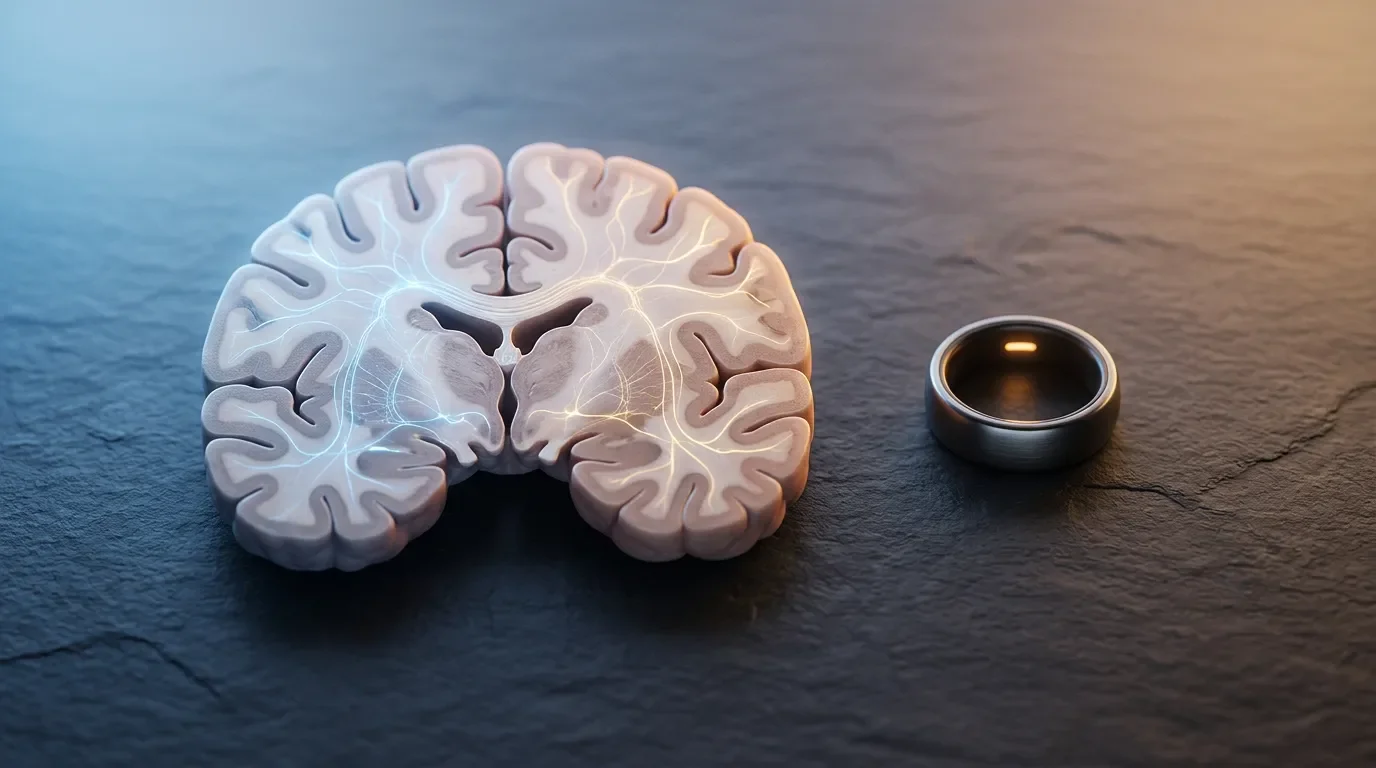
Cover image: AI-generated illustration.

このコンテンツについて、さらに観点や背景を補足しましょう。

  • ログインするとコメントできます。