
Dare to Lead: What Brown actually means by vulnerability, and where that gets complicated
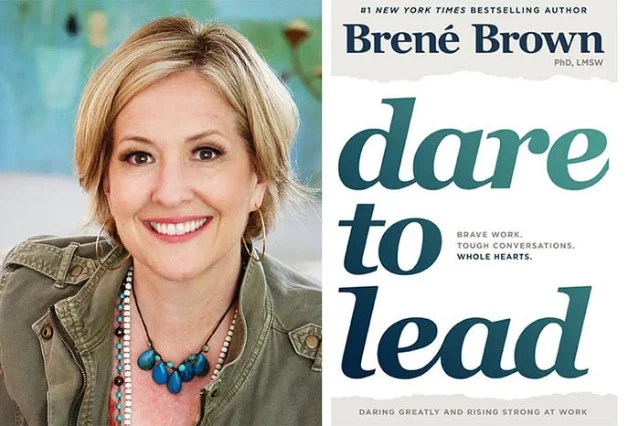
A practitioner close-read of Brené Brown's Dare to Lead (Portfolio/Penguin, 2018): Brown's central argument that courage — not strategy or charisma — is the defining leadership skill, requiring vulnerability as its prerequisite. Four frameworks unpacked to operational depth: the Daring Leadership vs. Armored Leadership model, the BRAVING trust inventory (seven discrete elements), The Armory catalog of defensive deflection behaviors, and Engaged Feedback (the SFD + Support Question). Seven verbatim quotes. Practitioner evidence from r/Leadership, r/managers, and LinkedIn. A rigorous, unflinching critical assessment drawing on Rafia Zakaria's privilege analysis, Jenn M. Jackson's "courage culture" critique, and Jenny Fernandez's power-dynamics framework. Closes with five specific Monday moves derived from what practitioners report actually shifting team behavior.

The four frameworks: a structural map
| Framework | What it addresses | The operational demand |
|---|---|---|
| Daring Leadership model | Why armored leadership is the default and why it fails | Identify your own armor; choose the opposite behavior |
| BRAVING inventory | What trust actually requires, element by element | Use as a self-check and a team diagnosis tool |
| The Armory | The specific deflection behaviors managers use to avoid vulnerability | Name the behavior you catch yourself using; then stop |
| Engaged Feedback (SFD + "The Support Question") | How to hold people accountable and give feedback without cruelty or coddling | Structure hard conversations so both parties feel safe enough to be honest |
Framework 1: Daring Leadership vs. armored leadership
- An armored leader responds to team uncertainty with "I don't want to hear about problems, I want solutions." A daring leader says: "I don't have the answer here and I need to think with you about this."
- An armored leader gives a performance review designed to avoid HR liability. A daring leader gives feedback that makes them temporarily disliked because the other person needed to hear it.
- An armored leader deflects a direct question about their own failure by pivoting to what the team did wrong. A daring leader names what they got wrong first.
"Daring leaders work from the assumption that people are doing the best they can. They stay curious about people's struggles and they are willing to be changed by what they hear." 1
Framework 2: BRAVING — the trust inventory
| Letter | Element | What it means in practice |
|---|---|---|
| B | Boundaries | You honor your boundaries and ask about others' — you don't assume availability or override stated limits |
| R | Reliability | You do what you say you'll do, at the scale you actually can commit to — not an aspirational promise |
| A | Accountability | You own your mistakes, apologize, and make amends — you don't deflect, justify, or disappear |
| V | Vault | You don't share what people confide in you — you treat information with discretion even when others don't |
| I | Integrity | You act from values even when it costs something, rather than choosing comfort over principle |
| N | Non-judgment | You can ask for help and give it without attaching shame — in both directions |
| G | Generosity | You interpret others' intentions as charitably as possible before deciding they were malicious or careless |
"Trust is built in very small moments... It is the willingness to say 'I'm struggling' when a colleague asks how you're doing." 1
Framework 3: The Armory — recognizing your deflection behaviors
"We cannot selectively numb emotions. When we numb the painful emotions, we also numb joy, gratitude, and happiness." 4
Framework 4: Engaged Feedback — the SFD and the Support Question
"Clear is kind. Unclear is unkind." 1
What practitioners report
"Brené Brown's Dare to Lead helped me realise vulnerability isn't a sign of weakness, it's just being human. And oddly enough, practising active listening in regular 1-on-1s made my team stop seeing me as the loudspeaker and start seeing me as a partner." 5

The critique, unflinchingly

Five Monday moves
Should you read it?
참고 출처
- 1Dare to Lead — Portfolio/Penguin
- 2The Power of Vulnerability — TED Talk
- 3Book Summary: Dare to Lead — Medium
- 4Dare to Lead — Portfolio/Penguin
- 5r/Leadership: Book Recco for Strong Wife
- 6LinkedIn: Dare to Lead Reflections — Laura Da Silva
- 7r/managers: Dare to Lead vs. Radical Candor
- 8r/socialwork: Unpopular opinion: Brene Brown
- 9r/CriticalTheory: Why do I hate Brene Brown?
- 10Goodreads: Dare to Lead critical reviews
- 11Literary Hub: Why Brené Brown's Gospel of Vulnerability Fails the World's Most Vulnerable
- 12Jenn M. Jackson PhD Substack: Courage Culture
- 13Jenny Fernandez Substack: When Vulnerability Backfires
- 14Brunch Book Club: Dare to Lead review
이 콘텐츠를 둘러싼 관점이나 맥락을 계속 보강해 보세요.