Day 8: Hub motor or mid-drive — what the difference actually means when you're buying

Day 8: Hub motor or mid-drive — what the difference actually means when you're buying

The two motor placements you'll see on every eBike — hub and mid-drive — differ in feel, weight balance, maintenance cost, and price. This lesson breaks down four key dimensions so you know exactly what to look for before comparing models, with the Tern GSD S10 (Bosch CX mid-drive) as a real-world example.
eBike School: 30-Day Daily Micro-Lessons
2026/6/13 · 0:19
1 订阅 · 14 内容

Today's concept: hub motor vs. mid-drive motor

Walk into any eBike shop and you'll encounter two very different motor placements — one tucked inside a wheel hub, one bolted at the pedal crank. Both get you up the hill. But they do it differently, cost differently, and suit different riders. Day 8 is about knowing which one you're actually looking at, and why it matters before you hand over your credit card.

Where the motor sits — and why that changes everything

A hub motor lives inside the center of either the front or rear wheel. When it runs, it spins that wheel directly. Simple, sealed, mostly invisible unless you look closely at the hub shell.
A mid-drive motor sits at the bike's bottom bracket — the same axle your pedals turn. Instead of spinning a wheel, it drives the chain. That means it works through the gears, not around them.
That one difference in placement cascades into almost every real-world comparison between the two types.

The comparison: four dimensions that matter when buying

1. Feel on varied terrain

Hub motors deliver a constant push from the wheel. On flat ground, that feels smooth and effortless. On a steep hill, the sensation can shift — if you run out of easy gears, the motor keeps pushing but your legs lose leverage, and the assist can feel like it's working against your cadence rather than with it.
Mid-drives work through your drivetrain, so shifting to an easier gear before a climb multiplies the motor's torque through the gear ratio. A mid-drive on a 15% grade in a low gear feels noticeably more natural — like extra leg strength rather than a wheel being yanked forward. This is why virtually all eMTBs (electric mountain bikes) use mid-drives. 1

2. Weight distribution

Hub motors (especially rear hub) push 5–9 lbs to the back corner of the bike. You feel it when carrying the bike upstairs, lifting it onto a rack, or trying to maneuver at low speed. 2
Mid-drives sit low and centered at the bike's balance point. A Bosch Performance Line CX mid-drive weighs about 8.6 lbs — similar to a hub — but because it's centered between the wheels, the bike handles more like a conventional bicycle. Cornering feels less tail-heavy.
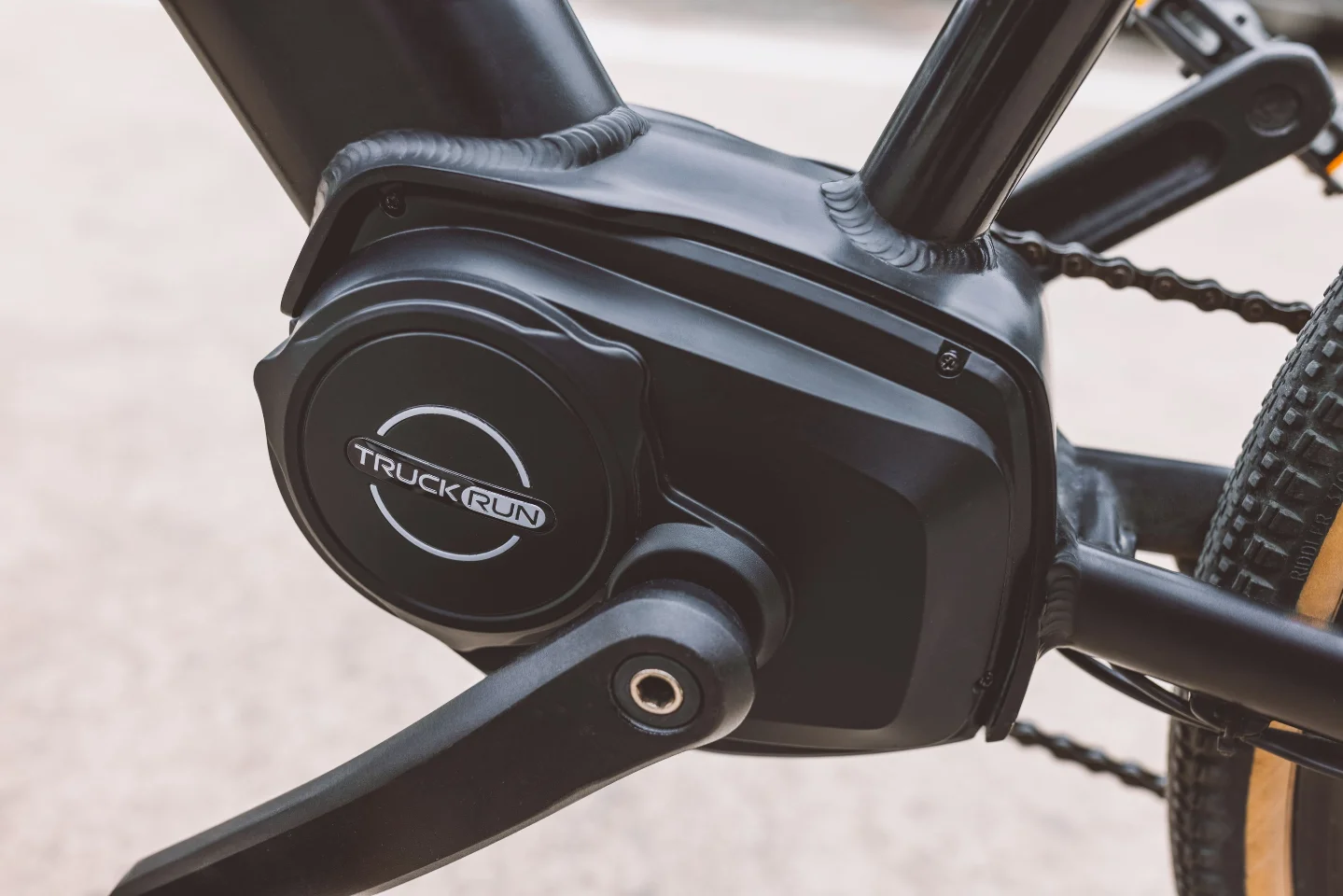
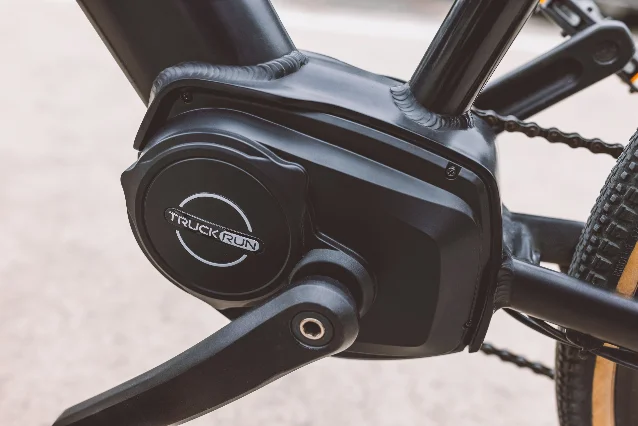
Close-up of a mid-drive motor mounted at the bottom bracket of a black eBike
Close-up of a TruckRun mid-drive motor at the bottom bracket — the motor housing sits where the pedal axle passes through the frame. 3

3. Maintenance and long-term costs

Hub motors have almost nothing to go wrong mechanically. They're self-contained, waterproof, and rarely need attention. If a hub motor fails, replacement is relatively affordable ($150–$400 for the unit). The downside: a rear hub motor is laced into the wheel, so fixing a rear flat requires either quick-release connectors or disconnecting the motor cable — not hard, but slower than a regular bike. 2
Mid-drives put torque stress through your chain and cassette — components that already wear out on regular bikes. Expect to replace your chain more frequently (often every 800–1,200 miles instead of 2,000+ on a hub bike). Shimano and Bosch both publish recommended service intervals for mid-drive systems. The upside is that standard bike-shop tools work on every component except the motor unit itself. 1

4. Price

Hub motors dominate the affordable end of the market. The commuter and utility bikes in the $1,000–$2,000 range — including most Rad Power Bikes and Aventon models you've seen in earlier lessons — almost all use rear hub motors. The motor is cheaper to manufacture and install, and the savings pass to the buyer. 4
Mid-drives from Bosch, Shimano, or Yamaha start appearing reliably around $2,500 and push the ceiling well above $5,000 for premium builds. The engineering is more complex, the electronics more sophisticated, and the brand licensing adds cost.
正在加载统计卡片…
Hub motorMid-drive
Typical price range$800–$2,500$2,200–$7,000+
Flat-terrain feelSmooth, directNatural, cadence-linked
Hilly terrain feelAdequate–goodExcellent
Weight distributionRear-heavyCentered
Chain/drivetrain wearNormalAccelerated
Rear flat repairSlightly slowerStandard
Best forCommuting, flat/mixed terrain, budgetOff-road, steep hills, long touring

Real example: the Tern GSD S10

The Tern GSD S10 is a compact cargo eBike that uses a Bosch Performance Line CX mid-drive — one of the most recognized mid-drive systems available. The bike carries up to 440 lbs (rider + cargo + passenger), folds for storage, and fits in elevator-sized spaces. It retails around $4,999. 5
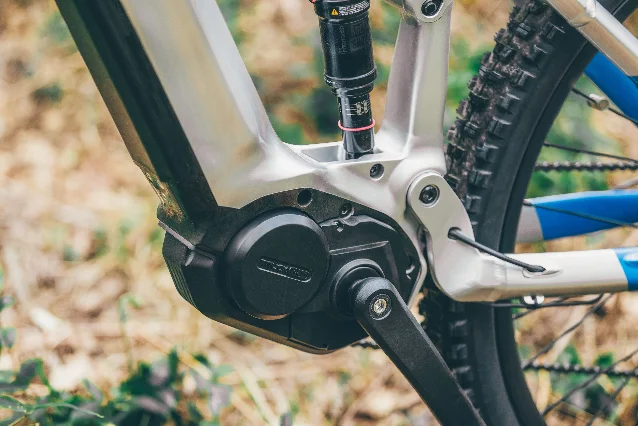
A black fat-tire eBike with a visible mid-drive motor unit in a forest setting
The mid-drive position — directly at the bottom bracket — keeps weight centered even on a heavily loaded cargo bike. 6
Why mid-drive for a cargo bike? Because cargo bikes frequently carry heavy loads over urban hills. A hub motor struggling under 400 lbs loses efficiency fast. The Bosch CX, working through the GSD's 10-speed Shimano drivetrain, multiplies torque through gears — so the motor stays in its efficient operating range no matter what's loaded on the rack.
The CX system also uses torque-sensor pedal assist (introduced on Day 2), which means assist scales with how hard you're pushing — responsive enough to feel natural even at low speed with a child seat attached.

Why it matters

The majority of eBikes sold in the US use rear hub motors. They're reliable, affordable, and perfectly adequate for most riders. If your riding is mostly flat commutes, dedicated bike paths, and occasional hills, a hub motor delivers everything you need at a lower price.
Mid-drives earn their premium on terrain and load. If you're planning to ride hilly routes regularly, carry cargo, or want a bike that handles like a conventional bicycle at low speed, the mid-drive difference is real and worth paying for.
A good shorthand: if the bike you're considering costs under $2,200, it almost certainly has a hub motor. Over $2,800, ask specifically which motor and which system (Bosch, Shimano, Yamaha, Brose) — the brand matters as much as the placement.

One small exercise

Next time you look at an eBike listing — online or in a shop — find the motor specification. It usually says "rear hub," "front hub," or lists a brand like "Bosch Performance Line CX" or "Shimano EP8." If it lists a brand name at the crank, it's a mid-drive. If it says "hub" or just lists wattage (e.g., "750W rear motor"), it's a hub drive. Practice identifying this on three bikes today — it's the first filter you'll use when comparing models next week.

围绕这条内容继续补充观点或上下文。

  • 登录后可发表评论。