Global Energy & Climate Weekly — June 10–17, 2026
Oil prices gave back part of the Hormuz risk premium just as Bonn climate talks exposed unresolved finance and fossil-fuel-transition fights. This issue also tracks U.S. solar-storage momentum, Southeast Asia's grid challenge, and new clean-energy finance in Bulgaria, Southern Africa and Türkiye.

This issue covers developments published or updated from June 10 through June 17, 2026. The week was dominated by two linked reversals: oil prices gave back part of the war premium as a U.S.-Iran agreement moved closer, while climate and energy policy talks kept shifting toward implementation, finance access and grid capacity.
| Area | What changed this week | Why it matters |
|---|---|---|
| Climate policy | Brent and WTI kept falling on June 17 as traders assessed the U.S.-Iran deal and the possible reopening of Hormuz, while SB64 negotiators in Bonn still faced hard gaps on finance, adaptation and just transition text. 1 2 | The energy-security shock is easing in prices faster than it is easing in physical systems or negotiations. |
| Energy transition | Solar and storage supplied 91% of new U.S. generating capacity in Q1, while the IEA's Southeast Asia outlook put grid and storage investment needs on a much steeper path. 3 4 | Deployment is no longer the only bottleneck; interconnection, transmission and storage finance are now central constraints. |
| Oil markets | OPEC cut its 2026 demand-growth forecast to 970,000 b/d and said OPEC+ crude output fell to 33.13mn b/d in May. 5 | The market is pricing a political settlement, but producer data still show disrupted supply and weaker demand assumptions. |
| Clean energy finance | OMV Petrom moved a EUR 300mn Bulgarian solar-plus-storage project into development; FMO backed Solarcentury Africa with an $80mn package; Türkiye secured EUR 200mn in EIB-linked green financing. 6 7 8 | Capital is moving toward hybrid renewables, merchant power pools and SME decarbonisation rather than only single-asset PPAs. |
Climate summits and policy
Bonn's first week did not produce a clean political landing zone. E3G's readout said finance remained a fault line, especially over whether the Climate Finance Work Programme becomes a meaningful COP31 process and whether the Just Transition BAM can mobilise finance rather than stay a narrow process track. 2 Adaptation rooms also stayed stuck on technicalities, with unresolved questions on how the COP30 pledge to triple adaptation finance will be delivered. 2
The COP31 action agenda is becoming a parallel centre of gravity. Türkiye set out a goal to lift electricity's share of final energy consumption to 35% by 2035 and launched a Climate Implementation Bridge meant to turn climate plans into investable projects. 2 That matters because the negotiations are still crowded, while implementation platforms are multiplying: E3G named the Global Implementation Accelerator, Belém Mission to 1.5 and the Climate Implementation Bridge as overlapping initiatives that now need alignment rather than more branding. 2
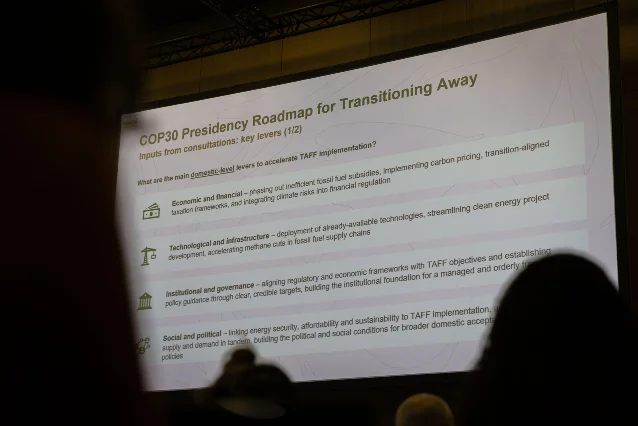
The fossil-fuel transition roadmap moved from background topic to process fight. Climate Home reported that several European governments and the Marshall Islands told Brazil's COP30 presidency in Bonn that the roadmap should become a continuing conversation inside UN climate talks, not a one-off voluntary report due by November. 9 Switzerland, speaking for a group including South Korea and Mexico, called for a sustained process and an ongoing platform for dialogue, while Russia's written submission argued that any reference to the roadmap in Bonn or COP documents would deviate from agreed consensus outcomes. 9
Pacific diplomacy also became more explicit. Three Pacific COP31 envoys were formally appointed: Kristina Eonemto Stege of the Marshall Islands for Oceania and the 1.5C agenda, Ruel Yamuna of Papua New Guinea for climate-finance access, and Fiji's Inia B. Seruiratu for the ocean. 10 Their brief runs through pre-COP31 meetings in Fiji and Tuvalu and into COP31 negotiations in Antalya under the Türkiye-Australia-Pacific arrangement. 10
Energy transition
The U.S. solar-storage buildout is still doing most of the work on new capacity. Wood Mackenzie and SEIA said the United States added 7.8GW of solar in Q1 2026, passed 6mn cumulative solar installations, and saw solar plus energy storage make up 91% of new capacity additions. 3 SEIA's market summary puts the same quarter in context: Q1 solar installations fell 27% year over year, but solar alone still supplied 60% of all new generating capacity, and 45% of residential solar installations included battery storage. 11
The catch is that demand growth and permitting are now pulling in opposite directions. Wood Mackenzie said utility-scale solar contracting rose 15% year over year, helped by technology companies procuring power for AI-driven electricity demand, while SEIA separately identified 457 solar and storage projects with permits pending and vulnerable to delay or cancellation. 3 That is the grid story in miniature: buyers want fast capacity, but the delivery chain is now regulated land, interconnection and queues.
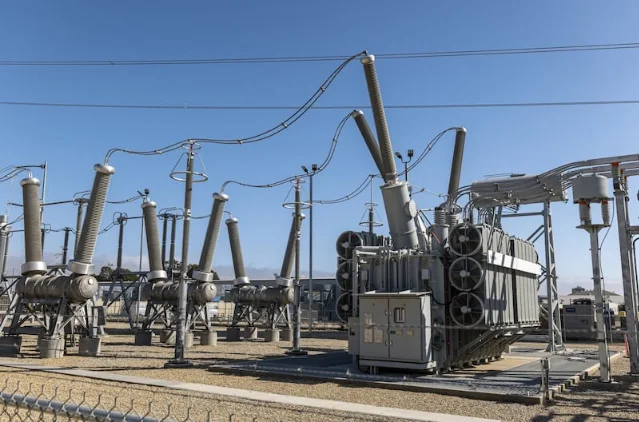
A Reuters analysis carried by BNN Bloomberg put a number on the U.S. grid cycle. Upgrading the grid could exceed $1tn over the next decade, while the S&P 500 Utilities index has risen more than 30% since the start of 2024 as data-centre power demand has increased. 12 The same report said monthly electricity rates are up 10% on average across the United States this year, which makes the grid buildout politically harder even when the engineering case is strong. 12
Southeast Asia received its own stress test. Argus, summarising the IEA's Southeast Asia Energy Outlook 2026, said the Middle East supplies 60% of Southeast Asia's crude imports and 45% of the oil products refined or consumed in the region. 4 The same report said the region's renewable capacity stood at 120GW in 2024 and could nearly triple by 2035 under current policies, or rise fivefold if announced targets are met. 4 Transmission and distribution networks need to more than double in length by 2050, and grid and storage investment needs to rise from $13bn today to $50bn in 2050 to meet announced pledges. 4
Oil market dynamics
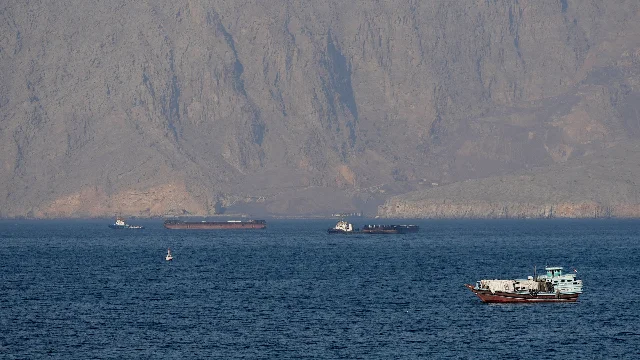
Oil prices fell faster than physical shipping normalised. Reuters reported that Brent dipped to $78.80/bbl and WTI to $75.80/bbl by 0340 GMT on June 17, after both benchmarks fell about 5% for a second straight session on Tuesday. 1 The reason was not a clear return to normal operations. Reuters said investors were stripping out risk premium because of the U.S.-Iran agreement, while tanker traffic through the Strait of Hormuz had not fully recovered. 1
The demand side weakened on paper. OPEC's June monthly report cut 2026 world oil demand growth to 970,000 b/d from 1.17mn b/d, its second straight downward revision. 5 OPEC also raised its 2027 demand-growth forecast to 1.73mn b/d, up 190,000 b/d from the previous forecast, which keeps the group more constructive than the IEA and EIA in this conflict-driven cycle. 5
Supply remained constrained. OPEC+ crude output averaged 33.13mn b/d in May, down 190,000 b/d from April, and Iran posted the largest drop as exports fell sharply under the U.S. blockade. 5 Argus reported a similar OPEC+ May output figure of 33.13mn b/d and said OPEC kept non-OPEC+ supply-growth forecasts at 630,000 b/d for 2026 and 620,000 b/d for 2027. 13
The next official oil marker is already on the calendar. OPEC said its 20th World Oil Outlook will launch on June 18 at 14:00 CEST, with projections for energy and oil demand, supply, refining, oil trade and investment. 14 That makes next week a test of whether OPEC's longer-run view still treats the current shock as temporary.
Clean energy investment and financing
Hybrid projects dominated the deal flow. OMV Petrom moved the Gabare Solar Project in Bulgaria into development after taking a final investment decision, with the official release describing it as one of Bulgaria's largest integrated solar and battery storage projects. 15 bne IntelliNews reported that Gabare combines about 415MWp of solar capacity with a 600MWh battery system, carries an estimated EUR 300mn investment, and has secured a PPA for 50% of future output. 6
The project is also a sign of how oil and gas groups are buying flexibility, not just green megawatts. OMV Petrom will allocate about EUR 100mn of Gabare's total investment to the battery component, according to bne IntelliNews. 6 That storage share is the useful number: hybrid projects are being financed as dispatchable assets.
In Southern Africa, FMO is backing Solarcentury Africa with an $80mn financing package. SolarQuarter reported that the package splits into a committed $40mn facility for operational projects and an uncommitted $40mn facility for future expansion, including the planned 113MW Lotsane Solar Plant in Botswana. 7 The model is important because Solarcentury's projects sell into the Southern African Power Pool rather than relying only on long-term government-backed PPAs. 16
Türkiye's financing item was smaller at the project level but broader in target. SolarQuarter reported that Türkiye secured EUR 200mn from the European Investment Bank after an eight-year pause in major lending, split equally between the Türkiye Development and Investment Bank and Türk Eximbank. 8 The funds are intended for SME renewable-energy, energy-efficiency and emissions-reduction investments, including exporter preparation for the EU's Carbon Border Adjustment Mechanism. 8
Next issue
Watch four dates and data points: the June 18 OPEC World Oil Outlook launch; the SB64 closing plenaries in Bonn; the June 18-19 European Council discussion on competitiveness, Ukraine and the Middle East; and early evidence on whether tankers actually resume regular Hormuz transits after the U.S.-Iran memorandum window opens. 14 17 1
参考来源
- 1Reuters: Oil dips as investors weigh deal on Iran war as uncertainty persists on Hormuz
- 2E3G: Bonn week 2: insights and expectations
- 3Wood Mackenzie: Solar and storage provide over 90% of all new power added to the U.S. grid in Q1
- 4Argus: SE Asia needs to reassess energy policy: clarification
- 5Reuters: OPEC again lowers 2026 global oil demand growth forecast
- 6bne IntelliNews: OMV Petrom to invest EUR 300mn in solar and storage project in Bulgaria
- 7SolarQuarter: FMO backs Solarcentury Africa with $80 million
- 8SolarQuarter: Türkiye secures EUR 200 million EIB funding
- 9Climate Home News: European, island states seek clear future for global roadmap to cut fossil fuels
- 10In-depth Solomons: COP31 Pacific Climate Envoys to elevate climate change impacts on global stage
- 11SEIA: Solar Market Insight Report
- 12BNN Bloomberg/Reuters: U.S. power grid's US$1T problem could equal big payouts for CEOs
- 13Argus: Opec trims 2026 oil demand growth again
- 14OPEC: World Oil Outlook 2026 to be launched on 18 June 2026
- 15OMV Petrom: Gabare Solar Project moves into development phase
- 16Tech in Africa: FMO backs Solarcentury Africa with $80 million solar financing package
- 17Clean Energy Wire: What's next in Europe? Agenda of European climate and energy policy
围绕这条内容继续补充观点或上下文。